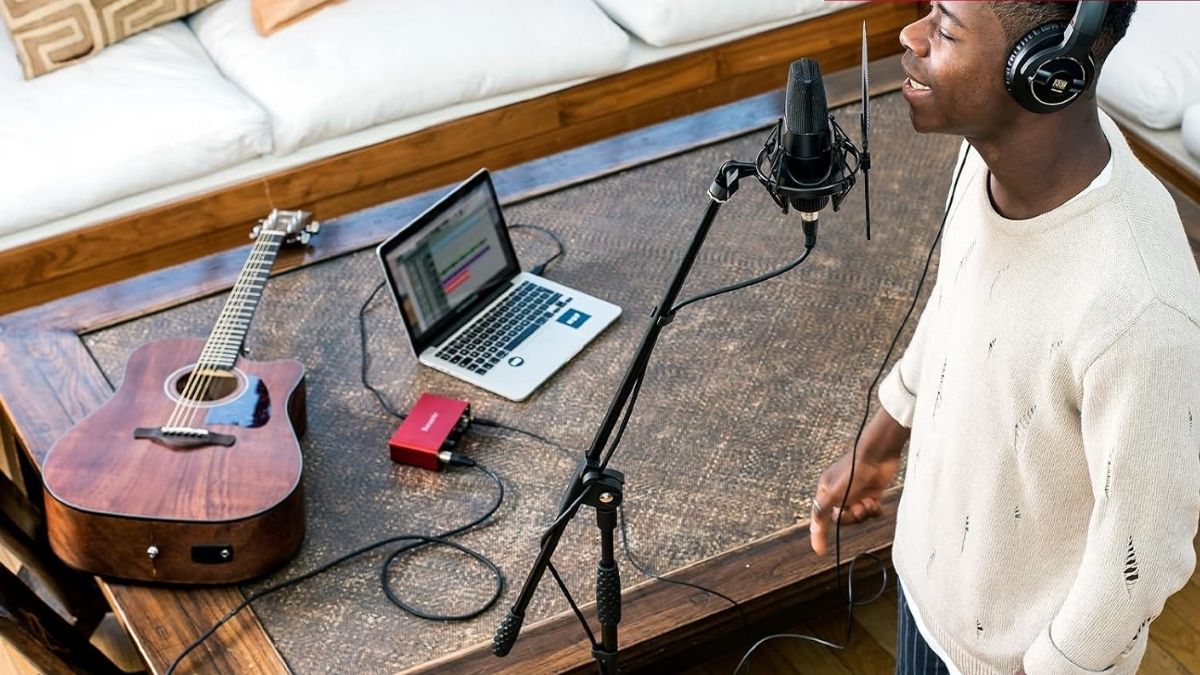
Building a home recording setup can feel overwhelming, especially when you’re trying to balance sound quality, budget, and ease of use.
You want professional results without drowning in technical details. That’s where the Focusrite Scarlett Solo 3rd Gen USB Audio Interface stands out. Designed for solo creators, it focuses on clarity, reliability, and simplicity rather than unnecessary complexity.
Whether you’re recording vocals, guitar, podcasts, or voiceovers, this interface promises studio-quality sound in a compact, beginner-friendly design. Let’s explore how it performs, where it excels, and where it may fall short—so you can decide if it’s the right fit for your setup.
What Is the Focusrite Scarlett Solo 3rd Gen
This section explains the purpose and positioning of the interface.
The Scarlett Solo 3rd Gen is a 2-in / 2-out USB audio interface that acts as the bridge between your microphone or instrument and your computer. It converts analog sound into high-resolution digital audio and sends playback back to your headphones or monitors.
Focusrite is widely respected in the audio industry, and the Scarlett line is often recommended as a first “serious” interface. The Solo version is tailored for individuals who record one source at a time and value clean sound over extra inputs.
Audio Quality and Technical Performance
Here’s a quick look at why the sound quality matters.
The interface supports 24-bit / 192kHz conversion, giving you more detail, headroom, and accuracy than basic consumer devices. Even if you record at lower settings, the improved converters still translate into cleaner results.
You also benefit from:
- Low-noise microphone preamps
- Flat, accurate frequency response
- Minimal distortion for transparent recordings
For vocals, spoken word, and direct instruments, the sound feels clear and professional without extra processing.
Inputs, Outputs, and Monitoring Options
This section focuses on how you actually connect your gear.
The Scarlett Solo keeps things simple but effective:
- 1 XLR microphone input with phantom power
- 1 high-impedance instrument input for guitar or bass
- Balanced monitor outputs for speakers
- Headphone output for private monitoring
The gain halo LEDs around the knobs help you set levels quickly. Green means you’re safe, red warns of clipping—making gain staging intuitive even if you’re new to recording.
Air Mode and Direct Monitoring
These features enhance real-world usability.
Air mode adds a subtle high-frequency lift that can help vocals sound brighter and more present. Some creators love using it for voiceovers and singing, while others prefer a neutral tone. The key benefit is choice.
Direct Monitoring lets you hear your input in real time without latency. This is especially useful for:
- Vocal tracking
- Guitar recording
- Live streaming
You stay in time and comfortable during performance.
Software Bundle and Compatibility
This section highlights added value beyond hardware.
The Scarlett Solo usually includes a solid software package that helps you get started immediately. Depending on promotions, this may include Ableton Live Lite, Pro Tools Artist or Intro, and a selection of plugins for EQ, compression, and effects.
You’re not locked into one platform—the interface works with all major DAWs on Windows and macOS, supporting long-term flexibility.
Strengths and Limitations to Consider
An honest comparison helps set expectations.
Key strengths include:
- Excellent sound quality for the price
- Very easy setup with USB-C power
- Durable metal build
- Ideal for solo recording workflows
Potential limitations include:
- Only one mic input at a time
- No MIDI ports for keyboards or synths
- Shared volume control for headphones and monitors
If you plan to record multiple people or instruments simultaneously, you may outgrow the Solo. For individual creators, these limits are often acceptable.
How It Compares to Similar Interfaces
This section adds market context.
Compared to other entry-level interfaces, the Scarlett Solo often offers better preamp quality and a stronger software bundle, though some competitors provide more inputs. Your decision depends on whether you value sound refinement or expandability more.
Many users keep the Solo as a secondary or mobile interface even after upgrading, which adds to its long-term value.
Is the Scarlett Solo Right for You
The Focusrite Scarlett Solo 3rd Gen delivers exactly what it promises: professional-quality audio in a compact, approachable package. If you’re a solo musician, podcaster, or content creator who wants clean sound without complexity, it’s a dependable and smart investment.
While it’s not built for multi-mic sessions or advanced MIDI workflows, it excels in clarity, ease of use, and reliability. To explore more creative gear and thoughtful gift ideas, browse Amazon best sellers and discover tools that support your recording journey.
Leave a Reply